
About Me

STORY | SOMATICS | SCIENCE | SPIRIT
- Award-winning writer who helps people re-author their inner world through narrative based approaches, mindfulness, and embodied awareness.
- 500hr-YTT Yoga Teacher who uses intuitive vinyasa and breath to guide students into optimal Alpha flow states.
- Trauma-Informed educator who translates neuroscience + somatic practices + ancient wisdom into accessible, embodied joy.

STORY
Hi, I'm Elizabeth Engelman—though most friends, these days, call me Lizzy.
It took me ten years to write my first book, The Way of the Saints, where I explored the generational traumas that haunted my mother, my grandmother, and me. The book is a multi-generational story, rooted in my Puerto Rican family and my experiences as the daughter of a Santería priestess. When it was done, I thought I was healed. The bitterness, resentment, and grief dissolved, replaced by empathy, clarity, and a sensation of a heavy cloud lifting.
There is medicine in narrative. Ancient shamans used stories to heal long before narrative exploratory therapy. And I have been writing for as long as I can remember. Writing to make sense of the chaos.
There is power in honoring what it means to be alive, to survive, to witness. When we say, “Once this happened,” with vulnerability and truth, we step onto the path of transformation.
I innately understood poetry, myths, and stories empower us to reframe memories and transform suffering into symbols, so I studied writing and poetry for decades. I received the 2019 Nilsen Literary Prize and the 2017 Emerging Writer Award from the Key West Literary Seminar, and my essays have appeared in The New York Times and Endeavor Magazine. I hold an MFA from the University of Tampa and an MA in Poetry from Lancaster University.
Through the power of storytelling, I believe we can shift from shame and fragmentation to love, empathy, and relational repair. In this way, to me, writing often feels like magic. Writing may not erase scars, but it does allow us to integrate them—Even more, it allows us to re-author our lives and helps us create the realities we choose.
Writing The Way of the Saints was both a reckoning and a release. On the page, I could rewrite old narratives– but after the book was published, I soon learned something was still missing. Like the leading expert in trauma Bessel van der Kolk teaches, the body keeps the score. Mine held chronic immune symptoms and chronic pain that could no longer be ignored. And it was then that I realized, despite the healing power of words, sometimes words fall short. Language, for all its beauty, can only take us so far. At some point the mind reaches its limit and there are pockets of memory that can only be accessed and healed through the body.
SOMATICS
Up until that point, as a writer, my love for words had shaped my entire life. Words are instruments of transformation. They are symbols pointing beyond themselves to realities we can only glimpse. They wield enormous power over the ways we perceive the world, and perception is reality. Yet healing began to ask me to cross the threshold where cognition could no longer lead– where feeling, not thinking, became the guide.
This all became intensely personal as I raised a profoundly deaf son who had no access to verbal language.
My son Micah was born deaf, and learning American Sign Language became a doorway into a new way of perceiving. Unlike English (a two-dimensional, linear language), ASL is three-dimensional and embodied. And the more I learned to communicate in his physical language, the more I realized I had been deaf my whole life-- Deaf to the language of my own body. Trauma had taught me to live in my head—dissociated, vigilant, suspended. It had left me fluent in analysis but estranged from presence.
SCIENCE
Yoga is an embodied practice for healing the mind. It is a kind of ancient contemplative neuroscience. And Ayurveda compliments it as a holistic science of the body, revealing how health is shaped by rhythm, environment, and energetic balance.
For me, beginning a yoga practice was like learning language lessons. It became my bridge back to my body, back to my true self.
I completed my 200-hour Yoga Teacher Training with Yoga Den Mandarin in Jacksonville, Florida, and my 300-hour Ayurveda Yoga Teacher Training with School Yoga Institute in Tulum, Mexico. And as a yoga teacher, my teaching integrates yogic philosophy, neuroscience, and embodied awareness to activate Alpha flow states, an optimal brain state that unlocks creative potential and bliss.
The 8-Limbs of Yoga offers a map: it is a wisdom tradition devoted to the intuitive study of breath, attention, awareness, and deep meditation. As an embodied path, it helps us remember what the yogic sages have always known: the body holds the keys to regaining our true identities.
SPIRIT
In Jungian terms, the Persona is the “mask.” From its Latin origin, the word persona means “mask” or “character role.” It refers to the Roman theater masks that actors wore, called personae. Each mask is a strategy for survival.
Carl Jung described the True Self as the essence behind the mask. Each of us wears a mask to navigate the world. These masks are carefully constructed out of fear of rejection. They are the the personalities we craft from memory, conditioning, and collective expectation.
While useful to navigate the world, your personality is only a small part of your true identity. In his book When the Body Says No: The Cost of Hidden Stress, physician and addiction expert Gabor Maté writes, “Much of what we call personality is not a fixed set of traits, only coping mechanisms a person acquired in childhood.”
Across traditions, the journey towards our True Self has many names—It has been called Individuation, Self-Actualization, or Self-Realization—but the aim is the same: to return to the truth of who you already are.
Stepping onto a yoga mat is stepping onto the path of unmasking.
In Autobiography of a Yogi, Paramahansa Yogananda explains that “Christ” refers not only to the historical person of Jesus but to the universal Christ Consciousness—the omnipresent intelligence of God permeating all creation. Yogananda described Jesus as a man who embodied this consciousness in its fullness, its perfection.
In his two-volume commentary The Second Coming of Christ: The Resurrection of the Christ Within You, Yogananda insists that the Christ is not outside us, but within. He writes: “The True Self is the Christ Consciousness, the reflection of the Infinite Spirit in every soul.”
Today, my passion is guiding others back to their True Self, the divine within. Through the same integration that transformed me, I bring together the power of narrative, yogic wisdom, somatic healing, trauma-awareness, and contemplative practice to help you awaken and remember who you really are.
Ananda is the bliss that arises when the mind quiets and the True Self shines—
It is not an emotion.
It is your essence.
My mission is to help you experience this for yourself:
to move from flow into joy,
joy into ananda,
and ananda into the recognition of your own divine nature.
When you align with your True Self, life stops being a struggle.
It becomes flow.
It becomes freedom.
And my work—my writing, my teaching, my retreats—are devoted to guiding you there.
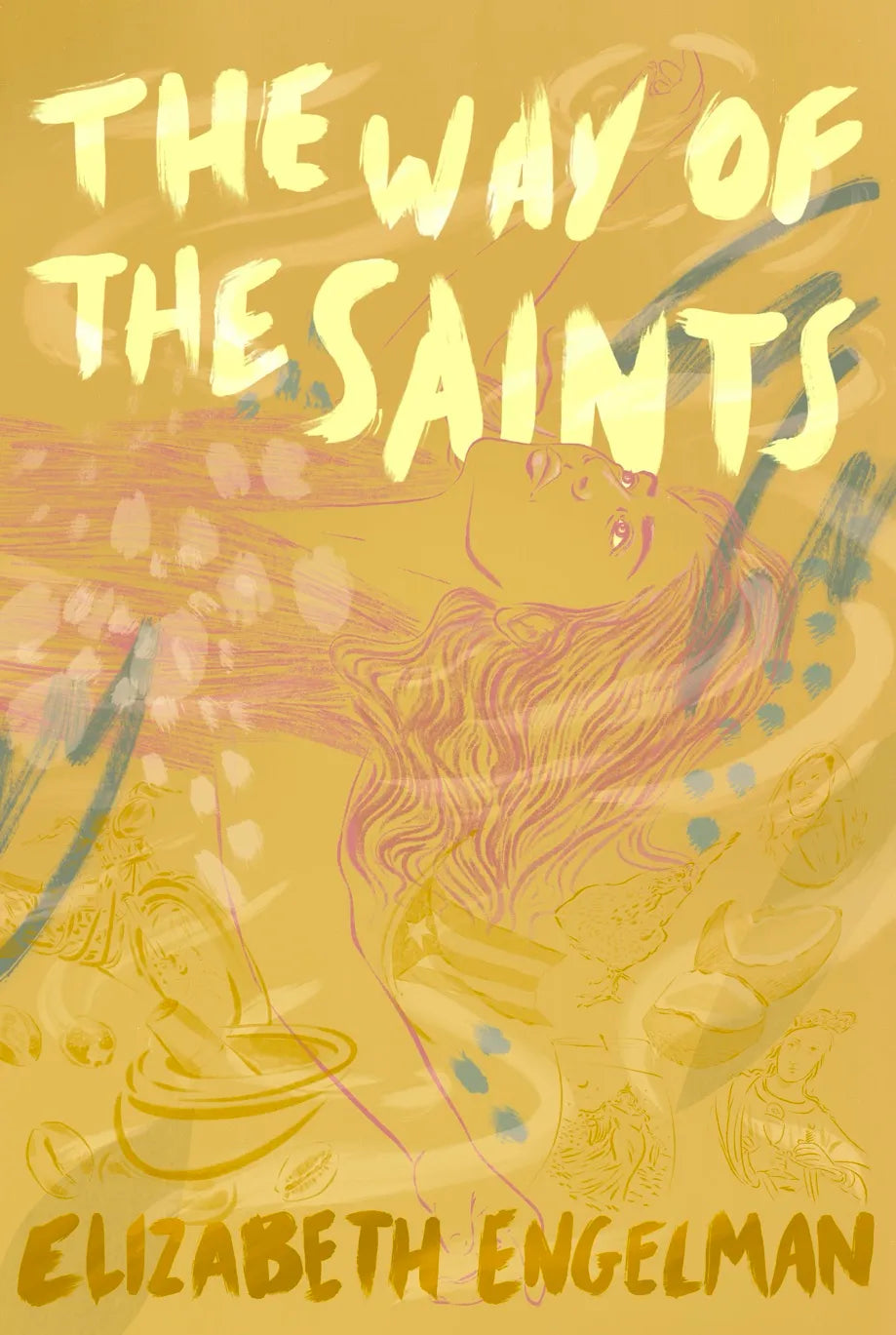
The Way of the Saints is available now as an ebook on Amazon, or directly through its original publisher, Black Lawrence Press.